
 Laura Hepper
RFP Analysis: These Are the Elements You Need to Identify First
Introduction: Why a Structured RFP Analysis Is Essential
When a new RFP arrives in your inbox, the clock starts ticking. Often, you only have a few days to decide whether and how you want to respond. And right here, one of the most important decisions of the entire proposal process is made: Is this opportunity worth investing time and resources in? Or is it better to opt out early and focus efforts elsewhere?
That decision can only be made on the basis of a structured, well-founded analysis. Organizations that take this step seriously are able to identify opportunities earlier, avoid costly missteps—and significantly improve their win rate. Because analysis enables differentiation: between promising opportunities and time-consuming risks.
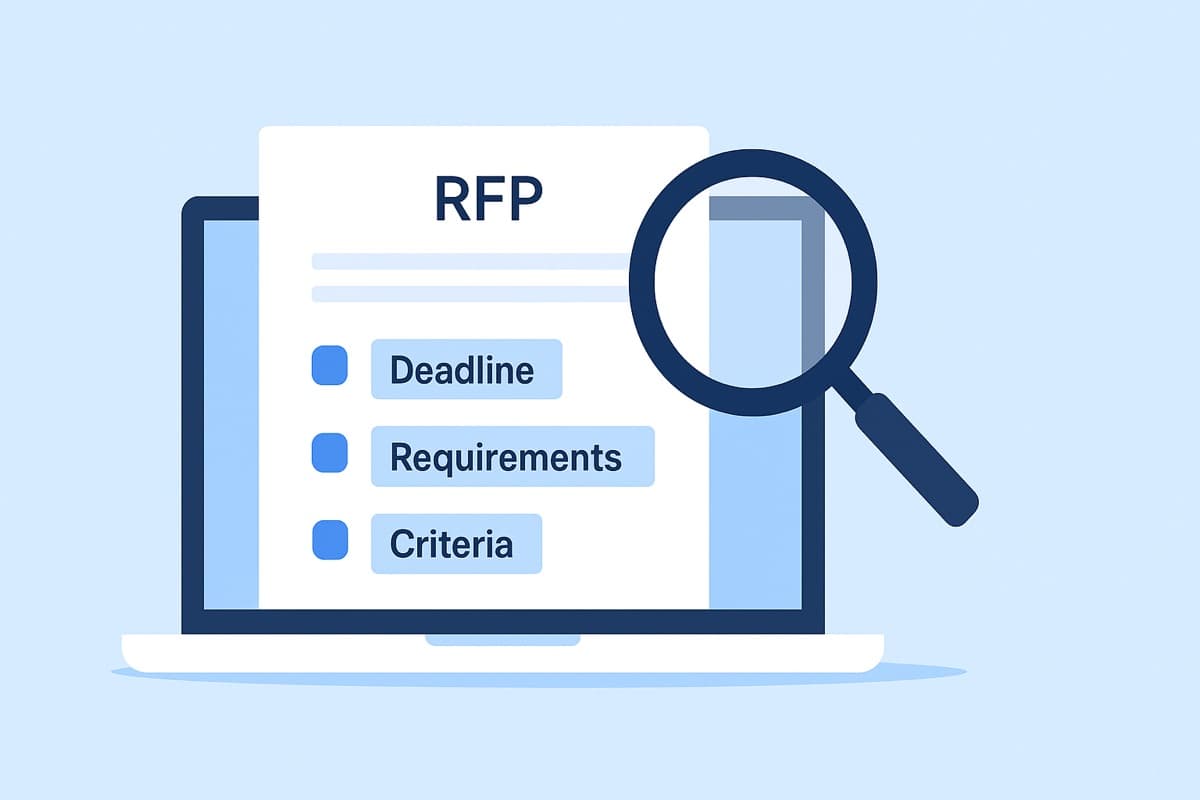
This article outlines the key components of a high-quality RFP analysis, highlights common mistakes to avoid, and shows how modern tools can make this process faster, easier, and more reliable.
The First Glance: What the Opening Pages of an RFP Can Reveal
Even the initial pages of an RFP—often a cover letter, executive summary, or table of contents—can provide more insight than you might expect. They reveal the tone, strategic importance, scope, and organizational context of the request. With the right lens, these pages can tell you a lot about whether an opportunity is worth pursuing.
Key signals to look for:
- Document type and objective: Is it a standardized request for goods, a strategic partner search, or a preliminary questionnaire?
- Industry language and tone: Do the terms used suggest a particular sector or regulatory environment? How technical is the language?
- Project scope: Are there early indications of budget, user volume, or geographic reach?
- Larger initiatives: Does the RFP appear to be part of a broader transformation—e.g., digitalization, sustainability, or restructuring?
A careful first read-through can often provide a surprisingly clear idea of whether to proceed with a deeper analysis—or not.
The 5 Key Elements You Must Identify First
1. Eligibility Requirements & Deadlines
One of the most common reasons for disqualification has nothing to do with content—it's about formal compliance. Eligibility criteria and deadlines are not minor details. They are the gatekeepers of the entire process. Fail here, and you’re out—no matter how good your offer might have been.
What to check:
- Submission deadlines & time zones – including whether digital or physical delivery is required
- Platform registration requirements – particularly for public sector or industry-specific portals
- Mandatory documentation: ISO certifications, credit ratings, reference lists, or company data
- Exclusion criteria: e.g. no relevant project experience, revenue minimums, or regional limitations
- Question deadlines and bidder communication windows
These fundamentals should never be overlooked—they determine whether participation is even an option.
2. Scope of Work & Requirements
This is where you'll determine whether your offering is a genuine fit—and what level of effort will be involved. The requirements section may be long, technical, and dense—but it contains the core of the opportunity. Often, the most critical needs are not directly stated, but implied.
Questions to guide your review:
- What exactly is being requested? Software, services, consulting, hardware—or a hybrid?
- How detailed are the requirements? Is there room for interpretation or customization?
- Are optional services requested? And if so, how significant are they likely to be in scoring?
- What’s implied but not explicitly stated? Tone, solution preference, familiarity with competitors?
The more precisely you understand what the buyer really wants, the better you can tailor your response—or decide to walk away.
3. Evaluation Criteria & Scoring
If you know the rules, you can play the game. Many RFPs include at least partial transparency into how proposals will be scored. Ignoring this is a costly mistake.
Typical evaluation elements include:
- Scoring matrix: price, quality, references, methodology, innovation, ESG, etc.
- Weighting system: e.g., 40% price, 30% concept, 20% team, 10% design
- Minimum thresholds: e.g., a required technical score to qualify
- Differentiators: where are you expected to excel—and how should you highlight it?
Aligning your proposal to match the stated scoring system is a crucial step in improving your chances of winning.
4. Proposal Format & Submission Guidelines
Formatting may seem like a technicality—but it’s a serious gatekeeper. Submissions are regularly disqualified for violating file size limits, using the wrong format, or exceeding page limits.
You need to assess:
- Accepted file types: Word, PDF, Excel, portal input forms, etc.
- Structure requirements: Are you required to use a specific outline or numbering system?
- Design limitations: Are images allowed? What about logos or brand colors?
- Submission platforms & upload requirements: Max file size, encryption, login credentials, etc.
A detailed checklist can prevent critical errors during the finalization and delivery phase.
5. Legal & Commercial Terms
Even if everything else aligns, one-sided legal terms can introduce risk or make a project unviable. That's why legal review should happen at the beginning—not the end—of your analysis.
Focus areas include:
- Contract templates & general terms: Are there problematic liability or indemnity clauses?
- SLAs & KPIs: Are performance expectations realistic and measurable?
- Penalties & risk sharing: What are the consequences of failure or delay?
- Proof of insurance or compliance: Are you required to submit documents immediately?
Involving your legal and finance team early ensures better decisions—and fewer surprises.
Conclusion: Analyze First, Then Decide
RFPs can be complex and time-consuming—but they also represent valuable business opportunities. Whether or not an RFP is worth pursuing shouldn’t be left to intuition. A thorough, structured analysis can save time, reduce risk, and significantly increase your chances of winning.
No offer without clarity. No decision without structure. No success without analysis.