
 Bernhard Franik
How Smart RFP Qualification with AI Makes Your Bidding Strategy More Efficient
Why Responding to Every RFP Is the Wrong Approach
For many companies—especially in competitive B2B markets—public and private tenders are an important growth driver. At the same time, they represent one of the most time-consuming and resource-intensive sales activities. Responding to an RFP (Request for Proposal) often involves dozens of hours spent on internal coordination, technical assessments, compliance checks, and formal documentation.
Despite the effort involved, many teams still respond to every RFP they receive—mainly out of fear of missing an opportunity. In reality, this reactive “always say yes” approach often leads to wasted effort, scattered focus, and poor win rates.
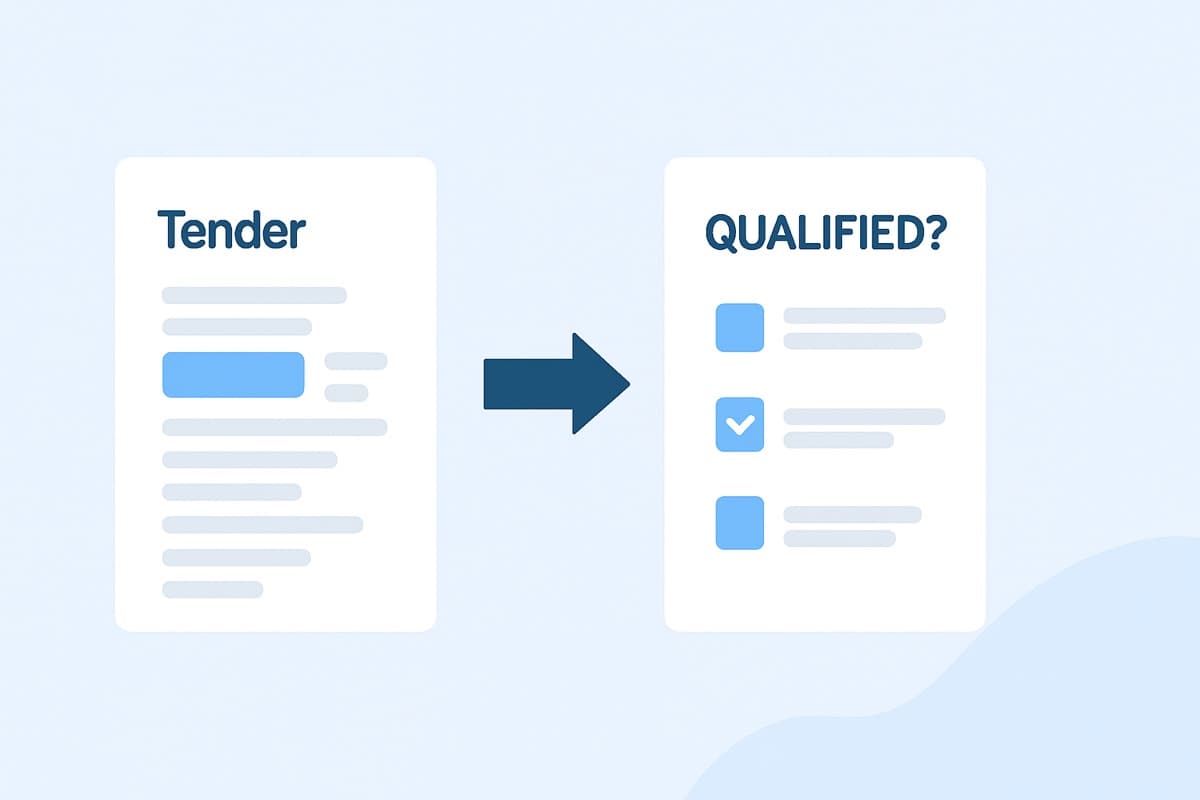
The solution lies in a structured qualification process. By objectively assessing each RFP before investing significant resources, teams can identify and prioritize the opportunities most aligned with their strategic goals and most likely to result in a win.
Modern tools like Everwise combine smart RFP software with AI-driven document analysis. These platforms automatically extract key details, assess risks, and help make go/no-go decisions—before valuable time is spent chasing the wrong opportunities.
What RFP Qualification Actually Means
RFP qualification refers to the structured pre-evaluation of incoming RFPs based on defined criteria, allowing a company to make an informed decision about whether or not to submit a proposal.
This go/no-go process often includes a scoring model that weighs both hard data (e.g., revenue potential, timeline feasibility) and softer indicators (e.g., existing client relationship, competitive positioning).
Typical qualification criteria include:
- Strategic fit with the company’s offerings
- Availability of relevant references or case studies
- Internal capacity and technical feasibility
- Compliance with deadlines and submission requirements
- Expected margins and pricing flexibility
- Competitor landscape and differentiators
A clearly defined evaluation framework helps teams make objective decisions and avoid reactive, emotion-driven bidding. Organizations that consistently qualify tend to reduce workload, improve morale, and significantly increase their win rates.
The Risks of Unqualified Bidding
Without a qualification process, many teams default to responding to every RFP—often guided by a “you never know” mindset. While this may feel proactive, it usually results in inefficiencies and even strategic damage.
Common consequences include:
- Wasted resources: Skilled professionals invest time in low-potential bids instead of higher-value opportunities.
- Team fatigue and frustration: Repeated losses can demotivate proposal teams and reduce quality.
- Missed opportunities: Promising RFPs may go unnoticed because resources are tied up in unwinnable pursuits.
- Lack of focus: If everything is a priority, then nothing is. Strategic clarity is lost.
A structured qualification process helps prevent these issues, especially when supported by a centralized platform that standardizes and documents decisions.
How Modern Software Solutions Support RFP Qualification
Automated RFP Analysis
Advanced RFP software like Everwise uses intelligent document parsing to analyze incoming tenders automatically. Instead of manually reviewing complex documents, the system identifies:
- Deadlines, formatting rules, and delivery instructions
- Disqualifying criteria and technical minimums
- Scoring systems and weighting factors
- Keywords and critical requirements
This saves time and ensures nothing essential is missed during the initial review.
Scoring Models for Opportunity Assessment
Another strength of modern RFP software is the ability to implement custom scoring models. These assign a quantifiable score to each opportunity, helping teams prioritize effectively.
This data-driven scoring may include factors such as:
- Past success rates for similar opportunities
- Solution and capability alignment
- Competitive pressure and market position
- Existing customer insights or account history
The result is a more consistent, objective, and repeatable qualification process.
Collaborative Decision-Making
RFP qualification should never be a solo decision. The best software enables collaborative workflows where sales, technical experts, legal, and leadership all participate in the evaluation.
This leads to:
- Shared responsibility and greater buy-in
- Clear documentation of go/no-go decisions
- Transparent reasoning that can be reviewed later
- Improved cross-team alignment and communication
This turns qualification into a strategic routine instead of a last-minute decision.
Best Practices for Implementing Smart RFP Qualification
Implementing a smart qualification process takes planning and internal alignment. The most successful rollouts include:
- Defining clear criteria: Work with all relevant stakeholders to outline what makes an RFP a good or poor fit.
- Creating a scoring model: Develop a simple, transparent system that can be applied consistently.
- Educating the team: Ensure everyone understands the benefits and purpose of qualification.
- Using the right tools: Platforms like Everwise help automate, document, and scale your process.
- Embedding it into workflows: Qualification must become a mandatory step in the RFP response process—not an optional one.
Many organizations start with a simple spreadsheet and later move to a dedicated RFP management platform to handle volume and complexity.
Conclusion: Less Is More
The takeaway is clear: companies that qualify RFPs consistently don’t bid less—they bid smarter. They focus their efforts on the opportunities that align with their strengths and have real potential.
Smart RFP qualification, supported by AI and purpose-built software, is not a burden—it’s an efficiency driver. It reduces noise, preserves energy, and gives proposal teams the space they need to produce better, more compelling submissions.
Ultimately, it helps turn RFP work into a core driver of sustainable business growth.