
 Laura Hepper
Maximizing RFP Success: How Smart Tools Transform Your Bidding Process
Crafting winning proposals demands both strategic thinking and operational excellence. Yet many teams struggle with the administrative complexity of RFP responses, often sacrificing quality for speed or missing opportunities due to resource constraints.
Modern proposal management platforms address these challenges by automating routine tasks and optimizing workflows, allowing teams to focus on what truly matters: developing compelling, client-focused responses.
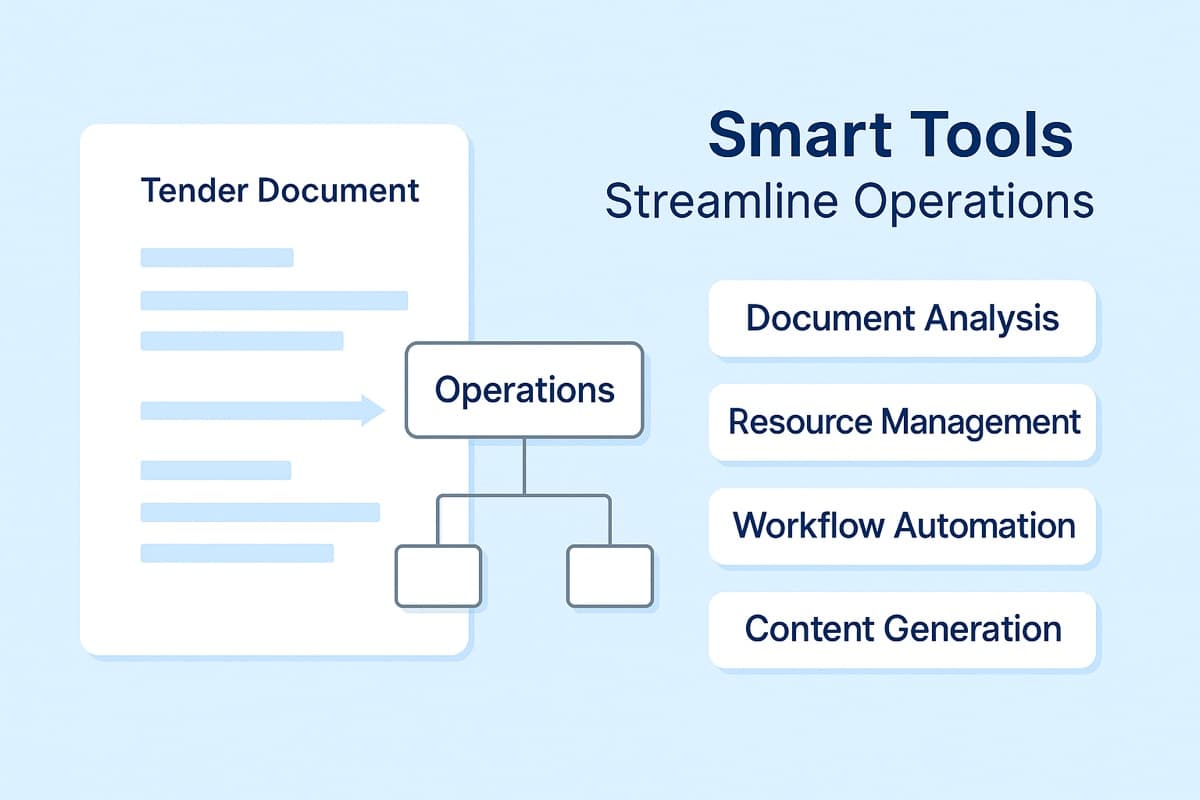
How Smart Tools Streamline Operations
Intelligent Document Analysis
Advanced platforms leverage artificial intelligence to parse complex RFP documents, instantly identifying critical elements such as:
- Submission deadlines and format requirements
- Evaluation criteria and scoring weights
- Mandatory qualifications and certifications
- Technical specifications and performance metrics
This automated analysis eliminates hours of manual document review and reduces the risk of overlooking essential details.
Centralized Resource Management
Rather than hunting through email chains and shared folders, successful teams maintain unified repositories containing:
- Historical Content: Past winning proposals and responses
- Template Library: Standardized frameworks and formats
- Corporate Assets: Qualifications, certifications, case studies
- Team Resources: Contact information and expertise areas
This organized approach ensures consistency across proposals while accelerating content development.
Automated Workflow Management
Smart assignment systems distribute work efficiently by:
- Matching tasks to team member expertise
- Balancing workloads across available resources
- Setting automated reminders for critical milestones
- Tracking progress against proposal timelines
These systems prevent bottlenecks while ensuring accountability throughout the development process.
AI-Powered Content Generation
Writing assistance tools analyze past successful submissions to:
- Generate contextually appropriate initial content
- Suggest relevant case studies and examples
- Maintain consistent messaging and tone
- Accelerate first draft development
While human expertise remains essential for strategy and customization, this technology dramatically reduces time-to-first-draft.
Improving Success Rates
Strategic Opportunity Assessment
Effective bid qualification processes help organizations identify winnable opportunities early, allowing teams to invest their limited resources in the most promising prospects rather than pursuing every available RFP.
Extended Development Timelines
By reducing administrative overhead, teams gain additional time for strategic activities that directly impact success rates:
- Comprehensive win strategy development
- Detailed technical solution design
- Thorough competitive positioning
- Client-specific customization
Leveraging Institutional Knowledge
Successful organizations build extensive libraries of proven content, enabling rapid customization of winning approaches for new opportunities. This institutional memory becomes increasingly valuable as teams respond to similar requirements across multiple clients.
Quality Enhancement Through Focus
When routine tasks are automated, proposal professionals can dedicate more attention to high-value activities such as:
- Understanding unique client challenges
- Developing innovative technical approaches
- Creating persuasive executive summaries
Implementation Considerations
Organizations considering proposal management platforms should evaluate solutions based on their specific needs and workflow requirements. Key factors include integration capabilities with existing systems, scalability for growing teams, and training requirements for user adoption.
The most successful implementations combine technology adoption with process improvements, ensuring that automation enhances rather than replaces strategic thinking and client focus.
Conclusion
Smart proposal management tools represent a strategic investment in competitive positioning. By eliminating administrative friction and optimizing workflows, these platforms enable teams to consistently produce higher-quality responses while pursuing more opportunities with existing resources.
The result is a sustainable competitive advantage built on operational efficiency and enhanced proposal quality.
 Laura Hepper